
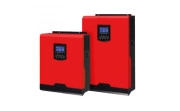
industrial UPS: Complete Guide to industrial Uninterruptible Power Supply Systems
Industrial UPS: Complete Guide to Industrial
Uninterruptible Power Supply Systems
Reliable electrical power is essential for modern industrial
operations. Manufacturing plants, automation systems, data centers,
telecommunications facilities, oil and gas installations, transportation
infrastructure, and other critical facilities depend on continuous power to
operate safely and efficiently.
A sudden power failure, voltage fluctuation, or electrical
disturbance can interrupt production, damage sensitive equipment, cause data
loss, and result in significant operational costs.
An Industrial UPS (Uninterruptible Power Supply)
provides a reliable source of backup power and power protection for critical
industrial applications. It is designed to keep essential equipment operating
during power interruptions while also helping protect electrical and electronic
systems from power-quality problems.
This guide explains what an industrial UPS is, how it works,
where it is used, the different types available, battery technologies, key
selection criteria, and the factors to consider when designing an industrial
UPS system.
What Is an Industrial UPS?
An industrial UPS is an uninterruptible power supply
system designed to provide continuous and stable electrical power to critical
industrial equipment.
Unlike conventional UPS systems commonly used for computers
and office equipment, industrial UPS systems are designed for demanding
applications where reliability, durability, and long operating life are
important.
An industrial uninterruptible power supply typically
consists of several major components:
- Rectifier
- Inverter
- Battery
bank
- Static
bypass
- Maintenance
bypass
- Control
system
- Monitoring
and communication system
- Protection
components
During normal operation, the UPS receives power from the
electrical grid and supplies the connected load. At the same time, the battery
system remains charged.
If the main power supply fails, the UPS automatically uses
stored battery energy to maintain power to the critical load.
Why Is an Industrial UPS Important?
Industrial facilities often contain equipment that cannot
tolerate unexpected power interruptions.
For example, a short power outage can stop a production
line, interrupt a PLC-controlled process, shut down communication equipment, or
cause sensitive electronic systems to restart.
The consequences can include:
- Production
downtime
- Equipment
damage
- Data
loss
- Process
interruption
- Product
waste
- Safety
risks
- Financial
losses
An industrial UPS helps reduce these risks by providing
continuous power to critical loads.
It can also improve power quality by helping protect
connected equipment against disturbances such as voltage fluctuations,
electrical noise, and frequency variations.
How Does an Industrial UPS Work?
The exact operating principle depends on the UPS topology.
However, online double-conversion UPS systems are commonly used where
high levels of power protection are required.
1. Normal Operation
During normal operation, AC power from the utility supply
enters the UPS.
The rectifier converts AC power into DC power. The inverter
then converts the DC power back into controlled AC power for the connected
equipment.
The battery charger maintains the battery at the appropriate
charge level.
This configuration allows the inverter to continuously
supply the critical load.
2. Power Failure
When the utility supply fails or falls outside the
acceptable operating range, the battery immediately supplies DC energy to the
inverter.
The inverter continues supplying AC power to the connected
load.
This allows critical equipment to continue operating without
waiting for an external generator or for the utility supply to return.
3. Power Restoration
When the utility power returns to an acceptable condition,
the UPS returns to normal operation.
The battery charger then begins restoring the battery's
state of charge.
Main Components of an Industrial UPS System
Understanding the main components helps when selecting and
maintaining an industrial UPS.
Rectifier
The rectifier converts incoming AC power into DC power.
It also supplies the DC bus that feeds the inverter and
battery charging system.
Inverter
The inverter converts DC power into stable AC power for the
connected load.
It is one of the most important components of an online UPS
because it continuously supplies the critical equipment.
Industrial UPS Battery
The battery system stores electrical energy for use during
power failures.
Battery capacity has a direct effect on the available backup
time.
Static Bypass
The static bypass can transfer the load to an alternative
power path under certain fault, overload, or maintenance conditions.
Monitoring and Control System
Modern industrial UPS systems may include digital displays,
communication interfaces, remote monitoring, alarms, event logs, and battery
diagnostics.
These features help operators monitor system status and
identify potential problems.
Types of Industrial UPS Systems
Different industrial applications require different UPS
configurations.
Online Double-Conversion UPS
An online double-conversion UPS converts incoming AC power
into DC and then converts it back into AC.
Because the inverter continuously supplies the load, this
topology provides a high level of power conditioning and protection.
Online UPS systems are commonly considered for applications
such as:
- Industrial
automation
- Control
systems
- Data
centers
- Telecommunications
- Medical
equipment
- Manufacturing
facilities
- Critical
infrastructure
Three-Phase Industrial UPS
A three-phase industrial UPS is designed for
high-power applications where three-phase electrical distribution is required.
Three-phase UPS systems are commonly used in:
- Manufacturing
plants
- Industrial
automation
- Large
data centers
- Process
control systems
- Infrastructure
facilities
- High-power
electrical installations
The required UPS configuration should be determined
according to the site's electrical architecture and load characteristics.
Modular Industrial UPS
A modular UPS consists of multiple power modules that
operate together.
This approach can provide:
- Scalability
- Redundancy
- Easier
capacity expansion
- Improved
serviceability
For facilities with changing power requirements, modular
architecture can allow additional capacity to be installed as the load grows.
Industrial UPS With External Battery Systems
Some industrial applications require extended backup times.
In these installations, the UPS can be connected to an
appropriately sized external battery bank.
The required battery capacity depends on factors including:
- UPS
output power
- Connected
load
- Required
backup time
- Battery
voltage
- Battery
technology
- Operating
temperature
- Battery
discharge characteristics
Industrial UPS Applications
Industrial UPS systems are used across many industries where
power continuity is important.
Manufacturing
Manufacturing plants use PLCs, industrial computers,
sensors, robotics, drives, and automation systems.
Power interruptions can interrupt production processes and
cause equipment to stop unexpectedly.
An industrial UPS can provide backup power to critical
control systems and automation equipment.
Oil and Gas
Oil and gas facilities often require highly reliable power
for control, instrumentation, communication, and safety-related systems.
Industrial UPS systems can be integrated into critical power
infrastructure to maintain power during utility disturbances.
Data Centers
Data centers require continuous power for servers, storage
systems, networking equipment, and other IT infrastructure.
UPS systems are an important component of data center power
protection and availability strategies.
Telecommunications
Telecommunication facilities depend on reliable electrical
power for network and communication equipment.
Industrial UPS systems can provide backup power during
utility interruptions.
Healthcare Facilities
Hospitals and healthcare facilities use many electrically
powered systems that require reliable operation.
UPS systems may be used to support critical electronic and
medical infrastructure according to the facility's electrical design and
applicable requirements.
Transportation and Infrastructure
Railways, airports, traffic control systems, and other
infrastructure facilities can use UPS systems to protect critical electrical
and electronic equipment.
Benefits of an Industrial UPS
A properly engineered industrial UPS system can provide
several operational benefits.
Continuous Power
The UPS provides stored energy during utility power
interruptions.
Power Quality Protection
An appropriate UPS topology can help protect equipment from
various electrical disturbances.
Reduced Downtime
Maintaining power to critical loads can reduce unexpected
interruptions to industrial processes.
Equipment Protection
Sensitive control electronics and industrial automation
equipment can benefit from stable and conditioned power.
Controlled Shutdown
If the outage lasts longer than the available battery
runtime, UPS systems can provide time for critical equipment to perform a
controlled shutdown.
Remote Monitoring
Communication and monitoring features can provide operators
with information about UPS status, alarms, battery condition, and load levels.
How to Choose an Industrial UPS
Selecting an industrial UPS requires an assessment of the
entire electrical load rather than simply choosing a larger kVA rating.
1. Determine the Required UPS Capacity
The first step is to identify the electrical characteristics
of the equipment that needs protection.
Important parameters include:
- kW
- kVA
- Power
factor
- Peak
load
- Starting
current
- Inrush
current
- Load
type
The UPS should have sufficient capacity for the present load
and, where appropriate, future expansion.
2. Calculate the Required Backup Time
Backup time determines how much battery capacity is
required.
For some applications, a few minutes may be sufficient to
allow an orderly shutdown or generator startup.
Other industrial applications may require significantly
longer autonomy.
Battery sizing should therefore be based on the actual load
profile and required runtime.
3. Consider the Operating Environment
Industrial environments can be significantly more demanding
than office environments.
Important factors include:
- Temperature
- Humidity
- Dust
- Vibration
- Altitude
- Corrosive
substances
- Ventilation
- IP
protection requirements
The UPS enclosure
Yorumlar
İlgili Bloglar
Kesintisiz güç kaynağı (UPS)
Günümüzün dijital dünyasında, elektrik kesintileri ve voltaj dalgalanmaları sadece can sıkı Devamını Oku
- 2
- 0 Yorumlar
İlgili Ürünler
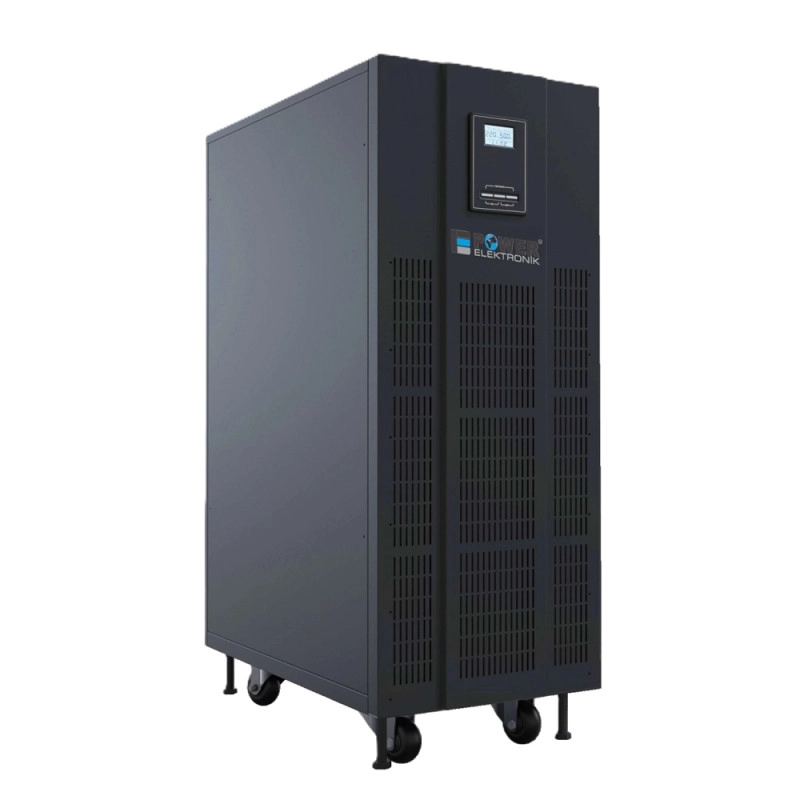
20 kVA Online UPS 380VAC/220VAC
PWR31-OL20000 MODEL 20kVA ONLİNE UPS» 3 Faz Giriş-1 Faz Çıkış» 20kVA Çıkış gücüne sahipt
123.258,82₺